
Nothing Ever Happens
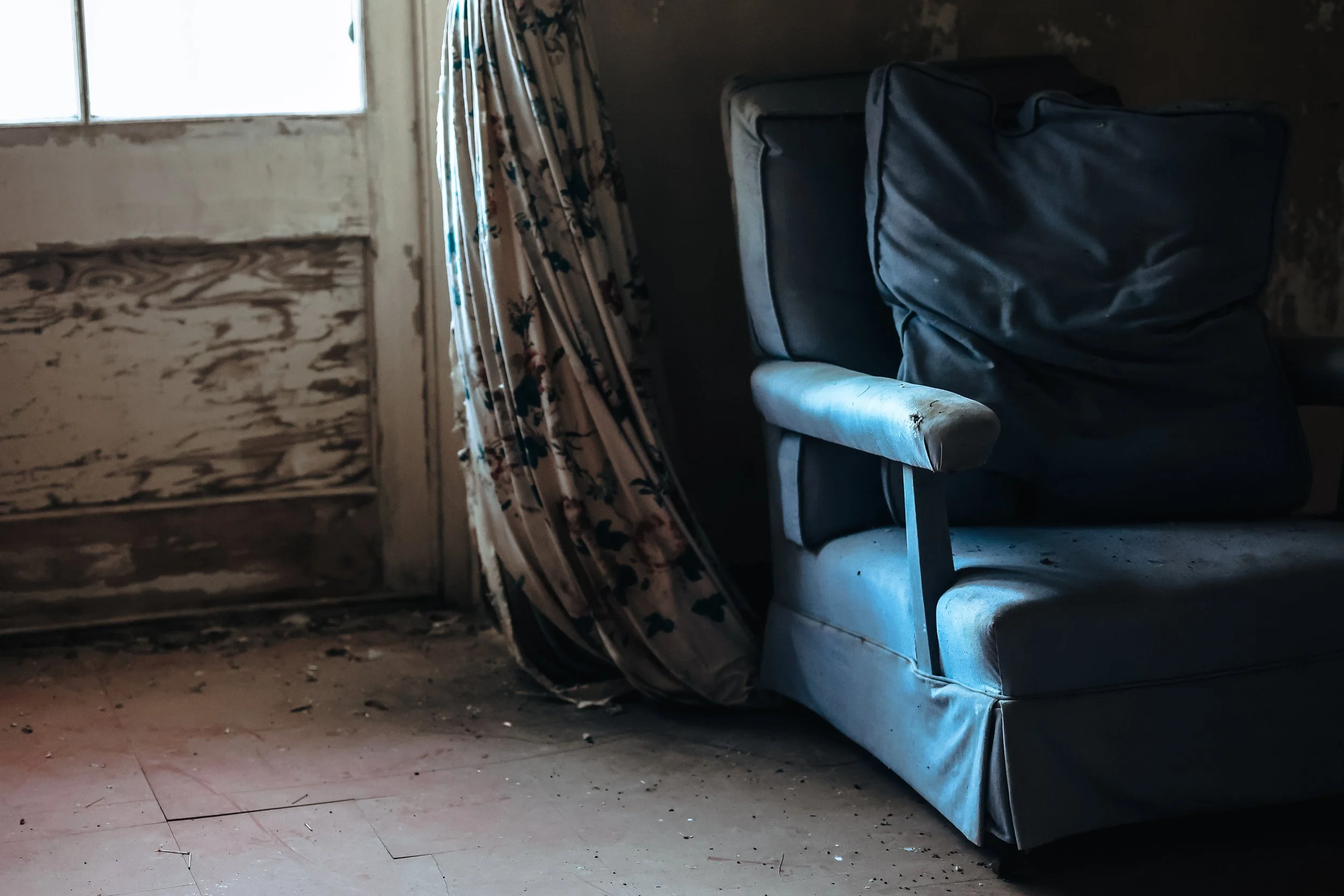
“Perch” by Lauren Suchenski
This all happened in the first year away from home: Stevie had her first kiss, in a nondescript dorm staircase against the yellow cinderblock wall, her first relationship, her first breakup. She wore satin dresses to parties, roamed around her grid of streets at night when all the lights were off except the streetlamps, cried in the cereal aisle of the grocery store. She was threatened on the subway by a man whose face she couldn’t remember. She went on first dates with people whose faces she couldn’t remember. Stevie didn’t mind that all of these things happened, even in quick succession. When something made her scared or anxious, she felt grateful. She was living the life she had always wanted to live, one that was full and dimensional and heavy.
In her hometown in the summer, it is a hundred degrees every day and the bedroom window faces west into the bluish early evening and the wild clematis chokes the gutters of the childhood house. The tree is always dying in front of the childhood house and the town is saturated with greenery that is already fading into the drained color of late summer.
Stevie and Bria drive everywhere. Nothing else happens here. Stevie and Bria have grown up together, they’ve been friends as long as they can remember. Bria goes to college here, and she lives here all year. She drives down Stevie’s street and points at the white peonies in someone else’s yard, collapsed over each other like the train of a wedding dress.
In July, it rains for days straight. Stevie and Bria sit through tornado watches in Stevie’s childhood room, where the dying tree taps at the windows with its fragile fingers and the walls are covered in posters. They drink vodka that Stevie’s parents store in the back of a kitchen cabinet and see how many secrets they will tell each other. Bria doesn’t have any secrets. Stevie doesn’t ever tell hers. It keeps raining, a rain that is supposed to make you clean but when it finally stops there are dead leaves in the gutters and branches down on the street where Stevie grew up.
They drive as far as they can out onto country roads until they are lost. The land around Stevie’s hometown, the land that raised her, is empty and flat. Bria’s car only has a CD player and she only has one Pavement CD. The song says over and over, “Every time I sit around I find I’m shot.” Stevie and Bria park the car and walk down driveways and bike paths at dusk and the cornfields look as tall as canyons and the sky turns a million shades of blue.
They drive through the town at night. Some people walk through their mowed backyards and take clothes off clotheslines. Some people stand in lighted dining rooms behind the wooden frame of front windows. Sometimes Stevie and Bria talk and sometimes they don’t, it’s enough to be here, there’s enough already said.
Sometimes Stevie and Bria fight. They fight about memories. They both think they remember everything. Bria says that in tenth grade Stevie lost the necklace she gave her for her birthday. Stevie says that isn’t true, she wore it for two years until it rusted, and besides it’s just a thing, it doesn’t matter that much. Bria says Stevie is pretentious and things are all they have.
Out in the country the signs say Leavenworth County Line and Private No Trespassing Union Pacific RR. Stevie likes to imagine where the railroad goes, like how these iron ties are connected to ones all the way out in the Utah desert and ones in California. Stevie believes everything real is symbolic. She believes in experience but also in perspective.
Stevie tells stories but she doesn’t tell secrets. Because of this, sometimes she lies. “Did I tell you,” she says, “about the time when I went on an apartment tour with my boyfriend and his parents? They were moving to the city. Then when we broke up I had to walk by the apartment every day on my way to class.” The stories are real but the symbolism is a lie.
Stevie is in love with this town. She is in love with its heavy sense of memory and its slow polluted river full of cottonwood cotton. She is a little bit in love with Bria too. These things happen when you grow up with someone.
In the country, Stevie and Bria park by an irrigation sprinkler which is suspended above a field of soybeans. They lie down under the irrigation sprinkler until their hair is completely saturated and they can’t open their eyes. “I’m in love with you,” Stevie says to Bria. Bria doesn’t look at her or say anything. Nothing happens. Stevie opens her eyes and looks at the starkness of the green and the blue, the perfect perpendicular lines of horizon and country highway. It looks like the most beautiful thing ever.
In the car, Bria says, “I love this song.” The song is mostly just Stephen Malkmus screaming. Stevie says, “I love being home.”
They drive to the cemetery at the eastern edge of town. There are big gnarled oaks that curve into the sky like cracks in marble. There are crows and clusters of surprise lilies and perfect symmetrical headstones with sullied plastic flowers at their bases. “Did I tell you,” Bria says, “that I learned how to drive here?” Stevie shakes her head. “Six years ago,” Bria says. They are twenty. It is August, the air is static and hot and full of memory.
In the country, they drive by Bria’s old house. There is wild summer phlox growing out of flooded irrigation ditches and there are disintegrating planks with rusted nails piled outside the driveway. They pull the car over and sit down in the tall grass on the side of the road.
August all around them is impatient and feverish and grabs at the ends of their hair and the soles of their shoes. Stevie leans down into her cross-legged lap and pretends to be a little kid. She pretends she is empty and she has never learned all the things she knows. “Did you know,” she says, as if telling the story will get rid of it completely, “two days after my breakup, I kissed him again on the subway platform. We were both drunk, coming back from a party, we never talked again.” Stevie is always in love, and she is sick of it, it makes her nauseous now.
Instead of responding, Bria tells a story back, which is what they generally do. “My roommate was always stealing things from me. I knew it, because I found my perfume on her desk. I don’t know why she thought she would get away with it. So one day I stole the postcard her boyfriend sent her and threw it out.”
Stevie laughs. Anything cruel seems lighthearted to her recently. She believes in karmic retribution and she believes in real love stories. Nothing seems naive, nothing seems meaningless.
She looks around. The landscape is so empty it’s hard to imagine there being less here centuries ago, before farmfields and sprinklers and gravel roads. She looks at the house. The house is pale yellow with white trim and wilted begonias in pots on the front porch. It looks old and faded like a haunted house from a fairytale. “Let’s go inside,” she says.
Bria follows her. Theirs is the only car in the driveway, and the lights are off. They try the front door, but it’s locked. Instead they stand on the porch and stare through the wide front window into the dark entry hall.
The garage is unlocked. They walk in and turn on the lights. Inside the garage is all of Bria’s family’s old furniture. The green sofa, the scuffed coffee table, the terra cotta pots with the dead spines of houseplants still standing upright. Bria almost screams. She sees the old desk from her childhood room, the broken bookshelf, the wooden picture frame with nothing in it. She says, “I don’t want to see this,” and she runs out back to the car.
Stevie stays for another minute. She thinks she might find something significant, like a family photo album or a piece of heirloom jewelry. But of course everything significant has been taken. She finds the garage fascinating but dark. Everything looks like a perfectly haphazard museum exhibit. She turns off the light and leaves it the way it was.
They start driving west instead of east when they drive. “Don’t you want to do something?” Stevie says. “Don’t you want something to happen?”
“No,” Bria says. “I’m happy.”
There are more houses in the country to the west of town. The grass is the rich yellow color of harvest. The houses have pickup trucks and curtained windows and boxwood bushes. Dusk is late and unceremonious. The clouds are hazy blue in front of the white shining moon.
At the end of August, Stevie and Bria are caught in a tornado warning. The sky is the dark gray color of slate, and Stevie is struck again by how beautiful everything is. Stevie wants to drive east to pass through the storm. Bria thinks this is dangerous. They pull over on the side of the road. Wind shakes the car, and they tuck their heads down under the dashboard. “Do you think we’re going to die?” Stevie says.
“No,” Bria says, but her voice is unsteady.
Stevie focuses very intensely on the speedometer which says zero and the odometer which says the car has traveled 87,304 miles. Bria’s eyes are closed. Stevie looks above the dashboard for a second and sees a funnel cloud, harsh and gray like the tornadoes in movies or weather station video footage. She tries to decide if this moment is symbolic beyond what is really happening.
Eventually they are waiting for the impact of the tornado and the sky begins to clear up, and they realize it has passed. As they drive back into town, they see smashed windshields and piles of pebble glass discarded like something natural.
“Are you happy now?” Bria says. “Something happened.”
“No,” Stevie says. “Drop me off at home.”
Bria turns her Pavement CD back on. “I’m so glad I didn’t wreck my car. And none of my windows broke.” The CD says, “Don’t expect, don’t expect, don’t expect.”
Stevie stands in front of her house and watches Bria’s car drive away. She looks at the dying ash tree in her front yard. She looks at the dusty pink coneflowers, which are so tall and wild that they block each other from the sun. She thinks about driving somewhere else, by herself, but then she remembers she is leaving soon anyway. The stale August heat feels suffocating. She tells herself, I am going somewhere, I am going back to somewhere real.
About the Author
Edith Patterson is a 20-year old writer and junior at Columbia University. Her fiction has appeared in Best Small Fictions 2023, Atticus Review, Fractured Literary, Chautauqua Journal, and elsewhere. She was the recipient of the 2022 No Tokens Young Writers’ Prize for Prose. She is from Lawrence, Kansas but currently lives in New York City.
about the artist
Lauren Suchenski has a difficult relationship with punctuation. She has been nominated twice for the Pushcart Prize and four times for The Best of the Net. Her full-length collection All You Can Measure (2022), as well as a chapbook “Full of Ears and Eyes Am I” (2017), are available from Finishing Line Press. Another chapbook “All Atmosphere” is also available from Selcouth Station (2022). More of her writing can be found on Instagram @lauren_suchenski or on Twitter @laurensuchenski.