
Phil Connors is on the Spectrum
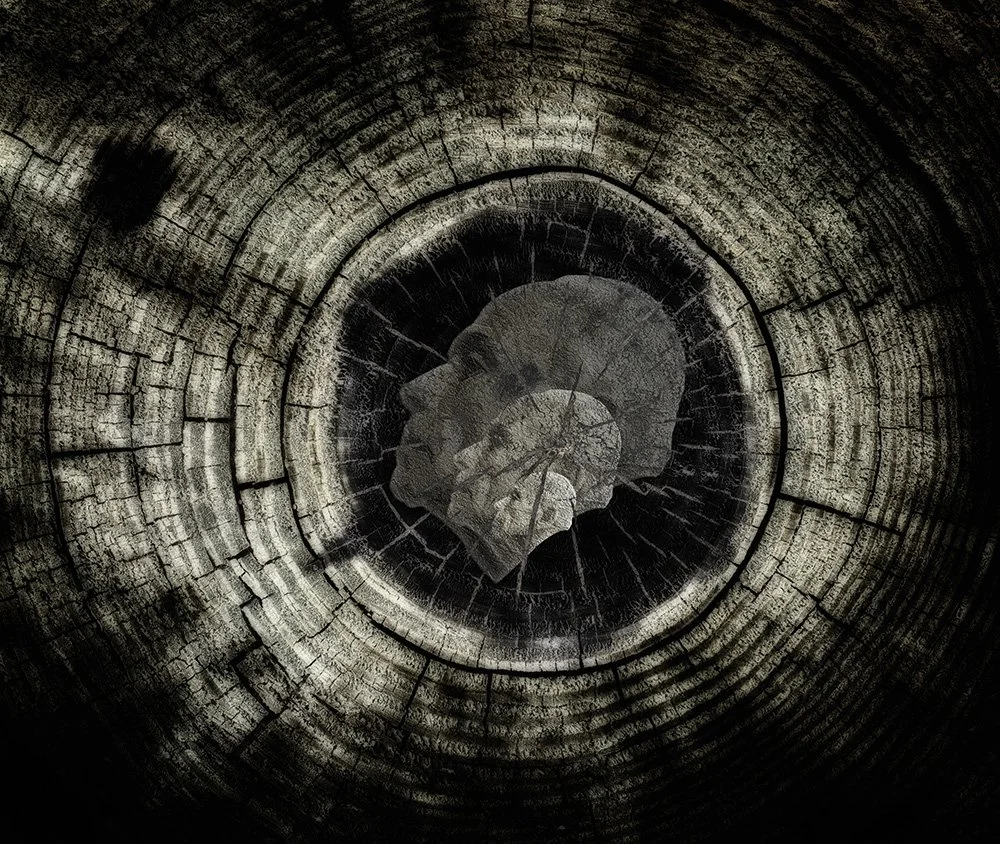
“Time After Time” by Najib Joe Hakim
The first time that I saw Groundhog Day was on a couples’ date night in the Summer of 1993. Ten of us sitting in a recently converted basement rec room watching a VHS tape on a projection screen. Popcorn, the whole bit.
The hosts’ names I’ve forgotten, the lighting and odor, I haven’t (too bright for the hour, new paint losing its fight against flooring glue).
Since that first viewing, I have watched it seventeen times with a notebook.
Not as comfort viewing. Not because Bill Murray makes me laugh, though he does. I watched it like an engineer taking apart a machine. I paused and rewound. I drew arrows and timelines. I kept a crude spreadsheet of days that never happened.
I tracked everything I could name as a variable:
– When he starts piano lessons.
– When he tries to seduce Rita by gathering biographical facts.
– The precise point when he stops asking, “What would you say if I told you I was the God?”
– Which version of his speech works on the old ladies with the flat tire.
– How many cycles it takes before he finds the boy falling from the tree.
– How late he can run and still make it to the old man in the alley.
If you’d seen my notebook, you would have thought it belonged to someone training for the test of being human.
From a certain angle, Groundhog Day looks like an autistic dream: a social world that resets every twenty-four hours; unlimited attempts at getting it right; instant feedback on whether your approach works. Fail today, try again tomorrow, armed with more data. Rinse, repeat, optimize.
That is how I watched it at first: as a pattern-recognition problem. The loop looked like a system, and systems, in my experience, are solvable. You find the governing logic. You map state transitions. You learn which inputs produce which outcomes. You stop making “mistakes.”
I thought the movie was about that.
***
Phil Connors starts the film doing what a lot of us do when we believe the world is basically an algorithm: he treats people as functions and days as puzzles. Seduce Rita? Gather information and deploy it in the right order: favorite drink, favorite ice cream, childhood dream, the line from French poetry that makes her soften. Become beloved in the town? Learn everyone’s crises ahead of time and appear, godlike, with precisely the help they need.
At first, the strategy looks plausible. Who wouldn’t want the ability to show up at the exact moment the tray is about to fall, to catch it and the girl in one smooth gesture? Who wouldn’t want to walk through a day having pre-solved every small disaster?
When you’re wired to see patterns, this is how effort starts to look: not as presence, but as preemption. Not as attention, but as advance work.
The film lets him chase that fantasy for longer than is comfortable. It watches him try seduction as an algorithm—if I say this, she’ll say that; if I add vulnerability here and a snowball fight there, the variables will finally line up and she will love me. It watches him try decency as another calculation—if I do enough “good things,” the universe will release me from the loop.
From the outside, it feels obvious that he’s missing the point. From the inside, if you share any of his circuitry, it feels like a perfectly reasonable hypothesis: if I can just get the pattern right, this will stop hurting.
The problem Groundhog Day exposes, and the one I recognized with a kind of nausea, is not that Phil misunderstands other people.
It’s that he misunderstands the shape of trying.
In his first hundred repetitions, effort means optimization. He adjusts his script, his timing, his haircut, his tone. He tests the boundary between charm and manipulation. He charts what works and what doesn’t, then tries to run the winning sequence again.
When that fails, he swings to its opposite: effort as erasure. The suicides are, in their own way, an attempt to find a different pattern. What if the loop itself is the problem? What if the only way out is off the board entirely?
The film is merciless on both fronts. There is no algorithm for love. There is no escape hatch. You can’t game the loop, and you can’t opt out.
For someone like me, raised on the quiet religion of “if you prepare hard enough, you won’t be blindsided,” this is not comfort. It’s horror.
***
The turning point of the movie is small enough to miss if you’re watching it for the fifth time on cable while answering email. It isn’t a big speech or a special effect. Nothing explodes. There are no trumpets.
What changes is the question he’s asking.
He has tried, by this point, every recognizable strategy: seduction, cynicism, self-improvement, hedonism, despair. None of them cracks the day open. None of them grants him a tomorrow that stays put.
So one morning, he simply gets up and moves through the town as if no one owes him anything. He learns piano, not as a means to impress Rita, but because music is there to be learned. He changes the old ladies’ tire not as an opportunity to be a hero, but because they need help and he is available. He continues to show up for the kid falling from the tree, even though the kid never once says thank you.
He is still repeating the loop. He is still, in a literal sense, doing the same day over and over. The external pattern does not change.
What shifts is the interior logic of his trying. He stops treating other people as levers. He stops treating himself as a project. He starts treating the day as a place to be rather than a problem to be solved.
I did not have a column in my notebook for that.
You can’t write it down as a variable. You can’t graph the moment when someone’s attention moves from “How do I get what I want out of this?” to “What is needed of me here?” Especially not when the outward behaviors look similar. From the outside, you could mistake this for a refined version of the original algorithm.
The difference is that he has stopped looking past the moment he’s in. He no longer views kindness as a spell cast on the future. He’s not buying his way out of the loop. He’s simply inhabiting it.
The film rewards that shift with the thing he wanted all along: a day that finally moves forward. But by then, it almost doesn’t matter. The work has already happened. The escape is proof, not prize.
***
Why does any of this matter, beyond the fact that I over-annotated a Bill Murray movie?
Because for people whose minds are built around pattern-recognition, it is dangerously easy to mistake optimization for care.
At work, my version of Groundhog Day was always some variation of this: if I anticipate every question in the meeting, I won’t be caught off guard. If I map out the politics, I won’t be blindsided. If I analyze a relationship hard enough, I will never misread a silence.
Trying, in that frame, becomes a matter of running simulations. You rehearse conversations alone in the car. You mentally pre-live difficult days. You arrive in rooms already braced for every possible outcome.
Sometimes this works. The clause gets fixed. The project goes smoothly. You make the right call because you saw the hidden step.
But there is a cost to living that way, and Groundhog Day is one of the few stories that names it without pathologizing it. The cost is that you can end up relating to your life as a series of puzzles rather than encounters. You can end up relating to other people as terrain.
You can, if you are not careful, end up treating even your own character as a project to be optimized rather than a self to be met.
What the film eventually suggests—quietly, persistently, under all the jokes—is that some parts of being human do not yield to pattern-recognition. They are not improvable in the usual sense. They don’t get “better” through repetition; they get truer through attention.
Phil becomes kinder not because he’s figured out that kindness is the winning move, but because he has finally surrendered the idea that there is a winning move.
That is the part I found hardest to watch, and hardest to admit I needed.
***
People like to talk about Groundhog Day as a redemption arc: a jerk becomes a decent man. That’s not wrong, but it’s shallow. For me, the deeper arc is about how he changes his relationship to knowledge.
Early on, knowledge is leverage. He weaponizes birthdays, food preferences, small-town gossip. If he knows enough, he believes, he can steer every interaction where he wants it to go.
By the end, knowledge has become something closer to responsibility. If he knows the old man in the alley will die, he doesn’t get to pretend he doesn’t. If he knows the boy will fall from the tree, he is responsible for standing there with his arms out every single day, even when it bores him, even when no one notices.
In that version, pattern-recognition is still central. The loop hasn’t turned him into someone who ignores structure. He has simply stopped confusing prediction with control.
He has learned, in other words, to live inside the pattern rather than trying to use it as a key.
It’s a strange thing, to find your own ambition quietly indicted by a comedy about a weatherman. Stranger still when you realize you’ve been running your life like the first half of the film: calibrate, optimize, expect the universe to cough up a reward.
I sometimes wonder what my notebook would look like now if I went back to it. I suspect I’d still track the boy, the old man, the loop. I’d still find all of that structurally fascinating. That part of me hasn’t changed.
But I like to think there’d be a new page at the end, one I didn’t know how to write when I was younger. A page with no arrows, no timelines, no variables. Just a question written in the middle of the paper in blue-black ink:
What if the point is not to escape the day, but to pay attention to it as if you won’t get another?
About the Author
Jeffrey-Michael Kane is the author of Quiet Brilliance: What Employers Miss About Neurodivergent Talent and How to See It (CollectiveInk U.K.). He writes from this learned experience as an ASD-1. He lives in New Orleans with his family in a house filled with paintings, dogs, and stories that unfold slowly.
about the artist
Najib Joe Hakim is a working documentary photographer, artist and photography instructor. Hakim also serves as the President of the Board for the Network of Photographers for Palestine and is a founding member of Class Conscious Photographers. He is the recipient of the Rebuilding Alliance Storytellers Award for a trilogy of projects on Palestine, a Political Art Fellow at the Yerba Buena Center for the Arts, and a past nominee for the US Artist Fellowship. His books are available at: < https://bit.ly/MagCloudBookCollection >. www.JaffaOrangePhoto.com