
The Rest Between Us
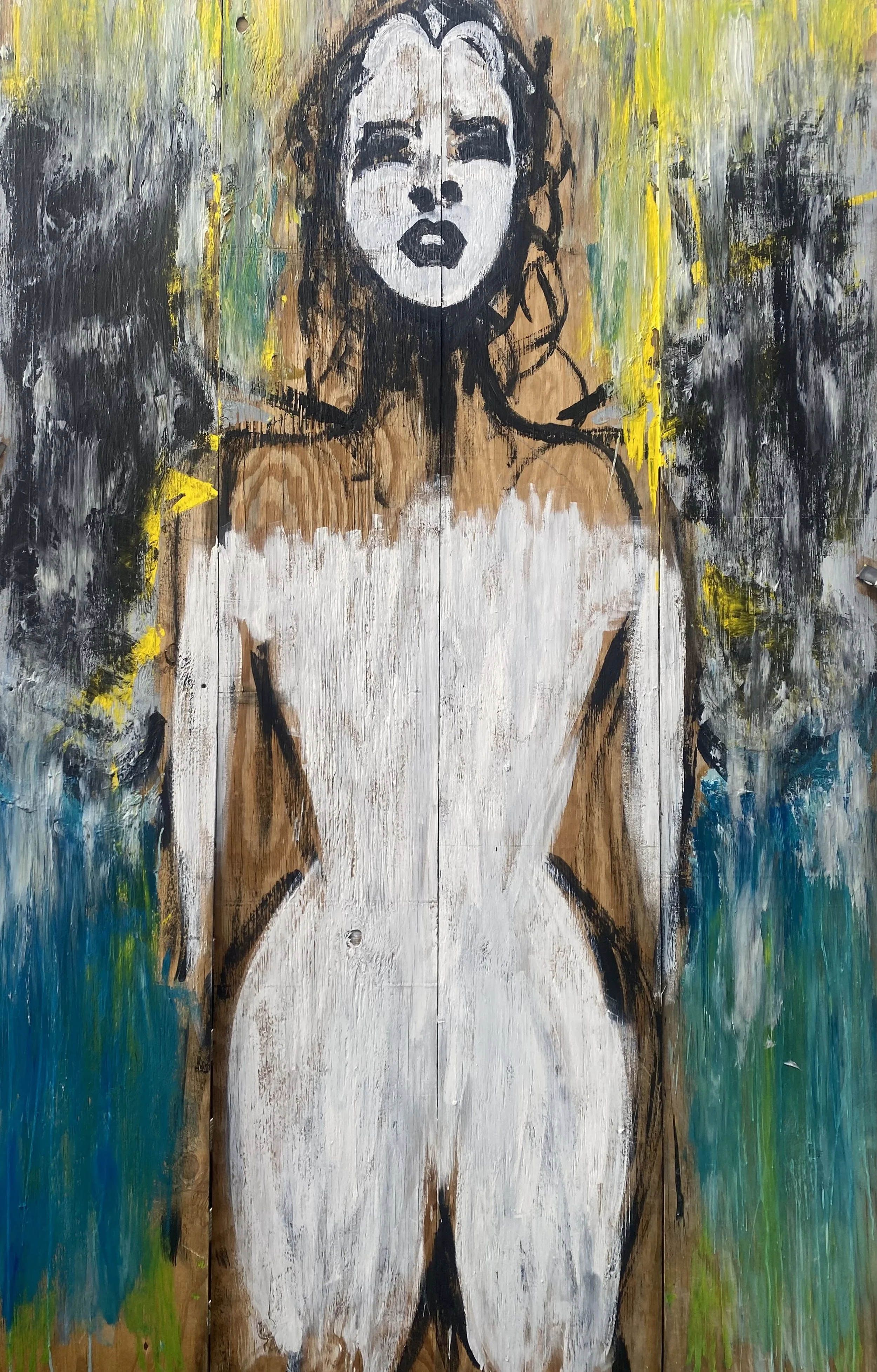
“Have You Ever Seen a Miracle” - Antonio Garcia III
Ma is almost a week past her expiration date when I take off her shirt and help her into the tub. She wants me to call my sister as I fill the tub with water. She tells me that they were wrong, that it’s not recurrence and it’s not spreading. She has much longer to live, maybe even a year. She says, when you call your sister, tell her about the tumor but keep the rest between us. Then she laughs and tells me that I missed a spot. Right here, she says, pointing to her shoulder.
I think about drowning her.
I would put her in the sink, and she’d be the size of a grapefruit. After slicing her open, I’d sprinkle salt over both of our bodies then put her under lukewarm water. She’d be my washboard baby, and I’d use a Scrub Daddy and Dawn while waterboarding her flyaways. She’d thank me, babbling, before clawing against my forearms, then say that I’m washing her in the wrong side of this two-part sink.
In the tub, she wants me to use apple cider vinegar and rosemary oil. She says she has warts and that it makes her skin go for less if I don’t cut them out for her. Devalued, she says and tells me to make sure she’s wearing socks in her casket. Pink ones, without any grips.
Picture this, she says, quadruple mastectomy, and laughs. If they gave her a concave chest, she’d fill it with perfume and baby oil. She’d cut a piece of construction paper and paste it to the walls of her divot, so that when the funeral people opened her clothes, they’d jump back from her jack-in-the-box heart. She says she wants only me in the room when they embalm her. My sister wouldn’t be able to handle it, she says, seeing her opened and bare.
In the tub, she feathers her hair and says that she has to be buried with it bleached-blonde. Last month, she told me that she’d rather die than lose it again. It’s hers so it must stay attached. I can’t donate it. She tells me if anything of hers were to be made into something else, it’d either be herself or my sister taxidermied. Posed and beautiful—a nice coat rack for your mud room, she says. Keep us together and tell people we were sold as a set. She’s not good at letting things go.
The last time I saw my sister, she’d said, I’ve got daughters of my own. And I watched their hands, clenching and small against the skin of her chest. They’re clingy. Like us, she’d said.
When I take a pumice stone to Ma’s calluses, I think about those highway hunting trips she took us on when we were younger. The dinners we used to have. Opossum amputations. Squirrels, close to sphinx cats when skinned. Doe, a classic, resting on the rumble strips. I think of the turkey vultures who watched us as we pulled the animals, heavy, onto that blue tarp in the trunk. The frog legs waiting for us, dried on the bench seat, my sister and I across from each other, smelling like sweat and soured hooves, then licking our lips when Ma turned the car back on. If anyone were to skin and stuff her, it’d be me.
Ma doesn’t notice that I’m whittling her down, and she faces me with lopsided lines where her nipples used to be. She asks if they’ll stuff her breasts back. If they’ll curl her hair like she wants. If my sister has shaved her head again in solidarity, like last time when it wasn’t terminal. How stupid, Ma says, getting rid of all that hair and she asks me if my sister’s back from the Bahamas. If she’s called. If her kids are okay. If she’ll be here soon. If she’ll take her to the salon. I tell her about the box-dye I got for her, under the sink, still unopened.
If I call my sister before Ma’s dead, she’d come back quick, and they’d do everything like twins. Ma would come clean immediately and my sister would agree. Not just a year, she’d say, even longer. She’d convince Ma to keep going, calling it, our treatment, while giving out strands of the hair she’d shaved, treating Ma like a cut-and-paste magazine doll. Our cancer, is what they’d say, shriveled and still beautiful. She’d call it support while telling everyone about this battle our family’s going through. Thoughts and prayers is what she’d ask for, pleading and bald to our neighbors.
I think about Ma’s lungs buoying up the rest of her body in the bath when she asks me if we should place bets on the doctor’s estimation. If she’ll die within a week or a month of the death date they gave her. She tells me that she wants a display-case casket, curled hair, and a popped collar that accentuates her collarbones. She wants people to think she might still open her eyes. When she asks for a wager, I tell her one to two thousand. Cremation. This Thursday.
When she turns over in the tub, I think about making her ashes into bath bombs. Citric acid and rose geranium with lemon zest on top. I’d sell them and get at least a thousand more—with her flesh, maybe two. I’d keep diluting and mixing her skin into flowers and Epsom salts and I’d give them to strangers wrapped in pink gift bags. When I’d run out of her ashes, I’d burn pieces of my own skin, and my sister and I would be out in the backyard again, burning rotted planks from the shed Ma told us we could tear down. Embers would singe the hair from our arms, turning our flesh hard, and she'd watch us with a bucket half-full of water, collecting soot to rub later on our faces, calling it eye shadow. Pretty girls is what she’d call us.
Make sure it’s open casket, she says. Make sure your sister doesn’t cry. Make sure you wear something nice. She’s ugly when she cries.
Ma wants the theme of the funeral to be her and asks if I could act as the auctioneer. She would watch as I’d pull out her heart, liver, and lungs to sell. She’d be patient with the paddle under her seat, waiting for someone else to shout. And when she’d raise it, she’d ask about my sister. I would list facts about my sister until Ma became the size of a pitted fruit, and she’d be happy, just waiting.
In the tub, she wants to know what she’s worth, so she starts adding up again. She asks me about having kids, then deducts, then pauses, then adds and says, just a phase, you’ll find someone. Brush your hair more. Use eyeshadow. Wear some new clothes.
If I call my sister after Ma’s dead, she’d insist on doing things the way Ma would’ve wanted. It’s like I can still feel her with us, she’d say, her spirit’s working through me. The way you’re doing those dishes, laundry, handling the estate—she’s not a fan.
I watch as Ma sits in the tub waiting for her towel. She says nothing and I know she wants me to call my sister. I think about how I’ll put her ashes in the smallest, most unassuming box I can find before giving them to my sister. Then they’d both be quiet. Blank and nothing to look at while I’d keep her daughters in the kitchen, teaching them about cremation, lung failure, and suffocation. Bad for each other, is what I’d tell her girls while they’d stand bleached-blonde before me.
I look at Ma and say nothing when I hand her the towel, thinking about how happy I get every time she plays with my hair or tries to brush it. Pretty, is what I know she’s trying to say.
When she climbs into the bed, she says her body would go for more than mine on the black market. She says she’s going by which of us has more to give, when I tuck her in. If we go by pure flesh quantity, she says, as I hold the blankets and listen for her breaths, you’re less.
When we were younger, she would bathe us in vegetable oil and makeshift birdseed—dried millet and crushed corn—for exfoliant. She’d pull halved potatoes from the fridge, red-rimmed, and place them over our eyes. She’d make mud pies for our feet, molding them as ornaments when they dried and crumbled. She’d hold our hands and ask if we wanted to do it again the next day, then she’d put us in the kiddie pool with a cut-off hose. She’d call it spa day, and we’d all be there with our eyes closed, tight-knit and floating.
About the Author
Sophia McLain is a writer from Arkansas and fiction student of Eastern Washington University's MFA program.
about the artist
Antonio Garcia III is a fine artist based in Las Vegas, Nevada. Working outside formal training and shaped by early efforts to access creative opportunities. Today, he exhibits in group shows across Los Angeles. With belief in the power of art to inspire, change lives, and communities.