
Instructions For Living a Life
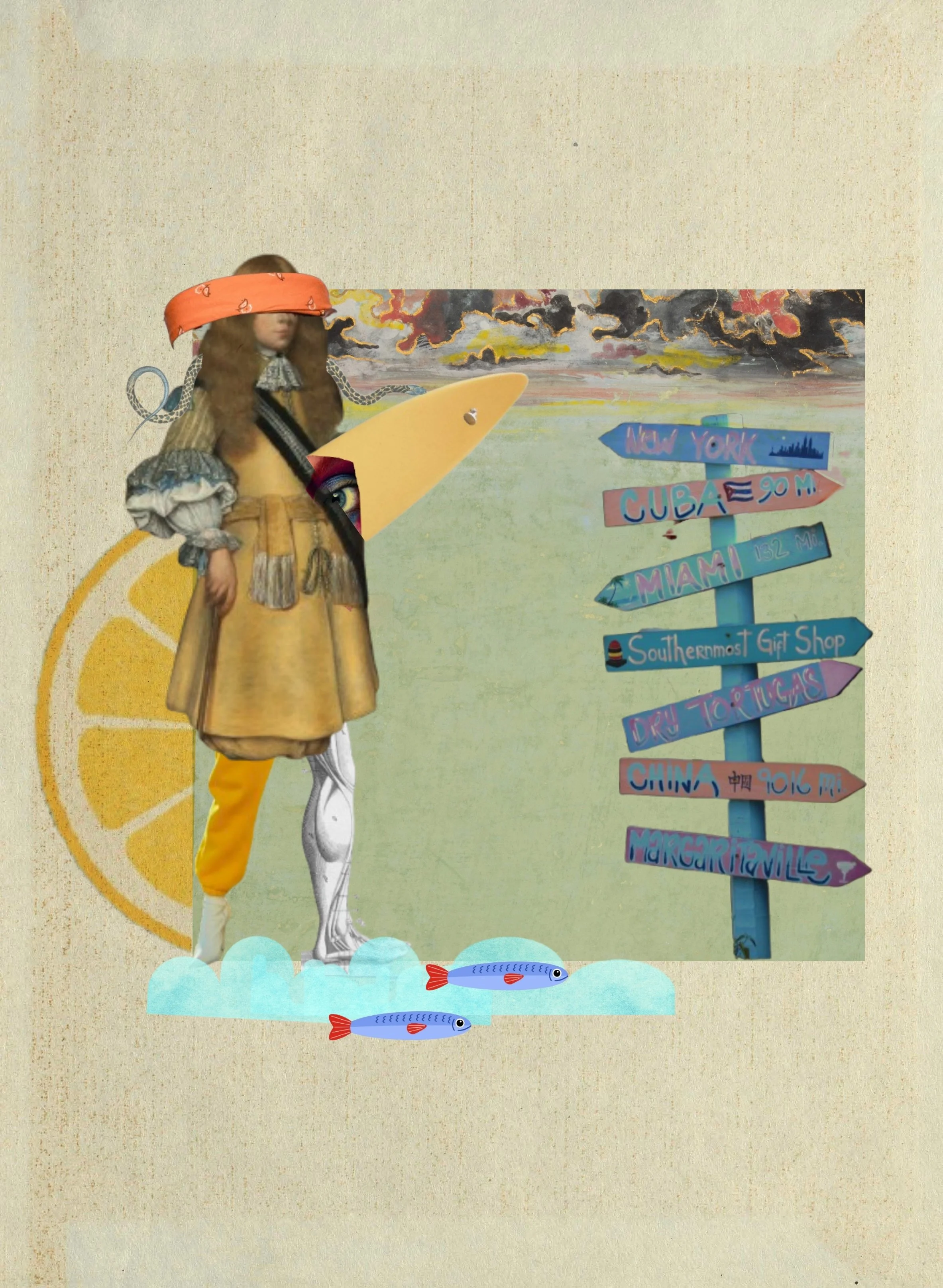
“Gap Year” by Ana Prundaru
One Friday morning, three weeks after Mila’s discharge from the clinic, George asks her out for coffee. She’s stepping out from the student admin centre, sliding the paperwork she has just signed into her bag, when he flags her down.
I heard you’ve been sick, Mila.
Oh— she says. Yeah. And she shrugs and waves a hand in front of her face, batting his question away. I’m all better now, though.
He seems satisfied with this, doesn’t ask anything else, and somehow they fall into step together, walking across campus towards the exit on North Terrace. They pass through the gate together.
You want to grab a coffee? he says.
Mila thinks of the session she had with one of the therapists in her final week at the clinic. How he sat in his armchair across the room from her and said, Maybe you just need to say yes more often, Mila. And so now, standing at the traffic lights with George—George, with his black hair pulled back into a ponytail and two shy, pink dots blooming on his cheeks (or are they pimples? She can’t quite tell)—she says, Sure, why not. Immediately she feels pleased with herself, how easily she has accepted his invitation, the casual note she has injected into her voice.
In the café they sit across a plastic table from each other. A strand of loose hair keeps falling across his face, which he pushes away, tucking it back behind his ear. The café is large and mostly empty but noisy in a frenetic, echoing way: clatter of dishes, the barista frothing milk at the espresso machine and banging the stainless steel jug on the counter, music playing over loud speakers. A television mounted high up on the wall shows daytime TV, The Drew Barrymore Show. George sits with his back to the television, keeping up a stream of chatter as he makes his way rapidly through three scoops of gelato. Mila, who ordered only one scoop, strawberry (because who eats gelato at 10:15 anyway?), eats as slowly as she can, letting the ice cream melt away, a puddle of pink at the bottom of the bowl. You don’t have to eat the melted bit, she figures. George, watching her, says, beaming, oblivious, It’s so good, right?
George: thin and fragile-looking, round-framed glasses slipping down his nose. Though they were in the same tutorial together the previous year, music research, they have never really talked before. While they eat—correction, while he eats—he tells her about himself, a jumble of facts, some general but others oddly specific: that he’s hoping to get accepted into a masters degree the following year. That he still lives at home with his parents, who don’t speak English (he translates for them, he says—at the doctor’s, the post office, Centrelink). That he likes drinking beer but has never smoked a cigarette.
Never? she repeats.
Never.
He rests his elbow on the table as he talks: thin forearm, spindly wrist, red blotches appearing and disappearing on his cheeks. (Not pimples after all, evidently.) His hand—holding the spoon, tucking his hair behind his ear—looks out of proportion to the rest of him, too big for his body. She notices this, can’t help herself noticing. Is riveted, in fact, by the way his wrist bone rises up through his skin. Envy swelling up in her.
Afterwards they stand in the street and keep talking. (Correction: George keeps talking.)
Let’s do this again, he says finally, and Mila, remembering the therapist at the clinic, whom she quite liked—he was one of the good ones, she thinks now, with his quiet voice and the way he nodded thoughtfully as she talked to him—says without skipping a beat, That sounds good.
He gives her a smile then, wide and delighted, and she sees that he’s as surprised at her answer as she is.
Really?
Yes, really, she says, smiling back.
And there it is again, the word she is supposed to try to say more often: Yes.
***
Post-discharge, Mila lives in a two-bedroom unit by the beach with her cousin Paige, although they rarely see each other since Paige spends most of her time at her boyfriend’s house. Paige, like George, is a student. Mila feels an obscure self-loathing about this: about the form she filled out at the student admin centre on Friday, the application to withdraw from her degree at the Conservatorium, the job she has accepted at the tax office, which starts the following Monday.
There isn’t any room in the unit for her piano, which she tells herself is a relief. Still, the next morning, Saturday, when Paige is out, she catches herself sitting at the kitchen table and playing it like a keyboard, her fingers tripping out snatches of music on its scratched wooden surface, sweet passages that she remembers by heart and plays repeatedly, silent chord after silent chord. The clock on the wall, one of those cheap, round-faced, battery-powered clocks with Roman numerals on its face, ticks loudly. A whole hour goes by like this, Mila sitting alone at the kitchen table, Mila and the clock, tick tock, tick tock.
That afternoon her brother visits. He brings gifts—flowers and a book of poems by Mary Oliver—and they sit in the kitchen together, that room with a clock, trying to make conversation.
How are you? he asks.
I’m fine, she answers politely.
They both pretend to ignore the way he keeps looking at her, head tilted to one side, eyes skittering over her: her body, her weight. Checking to see whether her clothes look loose again, whether she’s wearing several layers to cover herself up.
I have a bit of a sore throat, she offers finally, clearing her throat as evidence. Coughing modestly.
Her brother nods. He is two years older than her. There have been periods in her life where they were close, but this isn’t one of them, although she has an inkling that maybe he’d like it to be. She imagines inviting him and his boyfriend over for dinner—wine and food and music, laughter and candlelight, the four of them sitting around the table, her brother and his boyfriend and Paige and Mila, talking about books and celebrities and their favourite songs. Leaning in towards each other with the flame from the candle playing over them, all shadow and softness and light.
Mum would have made you a hot honey and lemon, he says, about her sore throat.
Then he adds, Remember the lemon tree?
The lemon tree that grew in their front yard when they were kids, he means, which their mother plucked lemons from whenever one of them had a cold. And now it’s Mila’s turn to nod because yes, of course she remembers: hot honey and lemon, drink of their childhood, a drink sour enough to make your lips pucker, yet comfortingly sweet and syrupy, a remedy to soothe (if not cure) all ills. She hates him then, for the way his eyes shimmer across the table from her, for the wetness at the tips of his lashes. Nodding at the fruit bowl that sits on the table between them (spotted brown bananas, one solitary wrinkled apple), she says curtly, No lemons here, though.
Which is true, although there are other truths too, deeper than the surface one, like that maybe she doesn’t want to be soothed, not now, not yet. Isn’t ready for a cure.
Picking up the poetry book, she says, trying to change the subject, Mary Oliver, huh?
I mean, some of the poems are pretty hokey, you know? But I kind of like them.
And she hates him all over again, for the note of apology in his voice and for his soft, wet eyes.
After he leaves, she steps out to the back porch to smoke. Winter sunshine, the grass in the small yard long and straggly, faint sound of sea to the west. Today, like every day over the past three weeks, she has followed the meal plan the dietitian at the clinic drew up for her—breakfast, lunch, dinner still to come, exactly as the meal plan stipulates—because she is being good now, doing everything she can to stick to her target weight, to never (never) get admitted to the clinic again. Whatever it takes. Still, it feels as though she is mourning the end of something. Her hunger perhaps, the old, familiar noise of it inside her head, that low-level buzz at the edge of her consciousness, without which her mind seems to fill with static. She smokes again, a second cigarette, and the day, like the weak winter sunlight, ebbs away.
Later, back indoors, she can still hear the sea even with the windows closed, having now attuned herself to it, a low murmur beneath the ticking of the clock. It occurs to her that she hasn’t spent any time on the beach since she moved in with Paige. Maybe she could go for a run tomorrow like she used to, down by the water’s edge, following the shoreline. Running is something they warned her against resuming when she was at the clinic, but already the picture has formed in her mind: shining wet sand and seagulls fluttering over the ocean and Mila running through it all, beneath the clouded sky.
Mila moving forwards, not stagnant anymore.
***
Her job at the tax office is in a building on the fringe of the city, on the tenth floor. A bank of windows runs the perimeter of the room, through which you can look down over the market and the courts and the park lands to the south, the river and the cricket oval to the north. Pot plants with thick, dark, waxy leaves are dotted about, which a man and a woman—contract staff, a husband-and-wife team—come in to dust and water each week, murmuring in Mandarin to one another as they move down the rows of desks. All day a quiet hum fills the air, people typing on keyboards, phones ringing, strip lights buzzing and flickering in the ceiling.
A woman in her mid-fifties called Sue sits at the desk next to Mila. She tells Mila that she has worked at the tax office for twenty-four years. There are photographs of her family pinned up on her side of the partition board, Sue and her husband at a resort in Bali reclining on lounge chairs by a pool, her teenaged son kicking a goal on a football field. Each day when she gets up for her morning break, the screensaver on her computer comes on, three words in flashing pink font on a black background, all caps: JESUS LOVES YOU. Mila wonders if this is how Sue has managed to stay in the same job for all those years. Bali and morning breaks and Jesus loves you, oh how he loves you.
Though there are protocols and procedures to the work, there are very few challenges, and it doesn’t take Mila long to settle in. She has always been good at following instructions. There are thirty-eight hours to the week, 7.6 hours to the day, including ten minutes for a morning tea break. If you work anything over the standard day, you can accrue it as time off in lieu—one hour, two hours, even a whole day if you can hold out that long. This is easy arithmetic, the kind she’s used to, adding and tallying, charting the numbers. Like counting calories. The only thing that’s changed is the currency she’s working with.
On Friday afternoons she goes for drinks with some of the girls from the office, but she eats her lunch alone each day, a sandwich and an apple, her new routine. The sandwich, which she makes at home and brings in on the tram, is always the same, tuna and lettuce, with one slice of bread buttered but not the other, because although her meal plan specifies buttered bread it doesn’t say whether this means both slices or just one. So: one slice then, just to make sure she isn’t eating more than she should. Isn’t breaking the rules. She varies the apple, though, sometimes a Granny Smith, sometimes a Pink Lady, sometimes a Golden Delicious (her favourite); and this process, choosing the different apples, feels luxurious, like a hard-won privilege. Green apple, red apple, yellow apple. Maybe food and choice aren’t opposing concepts after all.
On Tuesday lunchtimes she slips a fifty-cent coin into her pocket and walks to the David Jones department store in Rundle Mall—another routine with smaller routines built into it, which begin the moment she walks into the store and takes the escalator up to the second floor. Through the Lingerie Department, past the racks of bras and camisoles, past the G-strings and bikinis and full briefs (pink and alarmingly big), towards her destination, the Ladies’ Toilets. Sometimes the cleaner is there when she arrives, making her way down the row of cubicles, a middle-aged woman with dyed-brown hair and pasty skin who wears a yellow uniform, a smock with buttons down the front and a pocket over her right breast. The smock fits her badly, saggy at her throat but tight over her torso, so that you can make out her shape beneath it—doughy flesh, pockets of flab at her belly and hips. Legs in stockings, thick ankles, puffy feet encased in flat shoes. Mila nods at her, a greeting of sorts, though she keeps her eyes blank and pretends not to recognise her.
In the corner of the toilets, opposite the entrance, is a set of scales, the old-fashioned kind with a step-up platform and a coin slot on the side. Here then is the reason for the fifty-cent piece she has clasped between her fingers inside her coat pocket all the way down the mall; here, now, the most important moment of her week. At home they don’t have any bathroom scales because Paige apparently doesn’t feel the need for them; and so now, ignoring everyone else around her—a woman exiting the nearest stall, clacking in high heels across the floor, an older woman waving a hand in front of her face at the mirror to cool herself down, her mouth working as though she’s talking to herself—Mila slides the coin into the slot and steps up onto the platform.
A small truth: She wants to take her shoes off first, because this is how they weighed everyone at the clinic. But she doesn’t, since doing that, taking her shoes off in public to weigh herself, would draw attention to herself, make her look, what, weird or anorexic or something. Instead she does a calculation (more maths, her own private maths), subtracting 2.5 kilograms from the reading on the dial because people online say that this is the average weight of a person’s shoes and clothes. The calculation always worries her. What if the outfit she’s wearing weighs less than average and she is heavier than she realises? What if she’s lying to herself? As the needle on the dial swings wildly and then slows, trembling, a strange thought comes to her that if she holds her breath as hard as she can—if she really hollows herself out—she might weigh less. Magical thinking, though it feels instinctual. In one part of her brain she knows it isn’t rational but in another part it seems completely logical, the truest logic she knows.
Because where, before, the measure of her progress—the thing that gave her a sense of purpose, of moving forward—was to see a lower number on the scale each time she weighed herself, now, post-discharge, she focuses on keeping the number the same. There must be no variation, higher or lower, not even by a couple of hundred grams. This is difficult; it requires dedication, strenuous discipline even. If she hadn’t expected recovery to look like this, still so filled with rules, she can’t seem to operate any other way. And so each week she gives herself a little cheer when the scale records the same number.
You’re better, she says to herself, and the words are an echo of what she said to George that day in the quadrangle. Like a chant. You’re better, all better.
Because she is, isn’t she, since this is the definition of recovery they gave her at the clinic: not losing weight anymore. She is free.
One Tuesday, the cleaner appears just as Mila is stepping down from the scale. When their eyes meet, her gaze seems simultaneously blank yet knowing. The possibility that the woman recognises her, that she has clocked Mila and her weekly visit to the scale, makes Mila flush with shame. Mila and her ritual, Mila and her obsession, this thing she’s trying to prove so hard to everyone that she has got over, when she knows—how could she not know suddenly, under the woman’s cold, flat eyes—that she is as tightly bound to it as ever. All the adding and subtracting, the recording and calculating and measuring.
The numbers.
The numbers.
The shame stays with her until she is on the street again, walking from the mall back to the office. Then it fades, at least for another week.
***
George and Mila go out for coffee again. While he knows that she was sick, she doesn’t disclose to him the nature of her illness or its treatment, the reason she was away from university for most of the previous semester. She does confess that she has quit her degree. He makes a little moue at this but then texts her later, and the following Saturday evening they go out to a movie and then to a karaoke bar. She cringes when he suggests it, the karaoke bar (does anyone even do that anymore, go to karaoke?), but she goes along with it anyway. George at the microphone then, singing songs from the noughties, Viva la Vida, The Blower’s Daughter, his eyes closed, swaying slightly. So earnest he looks as he sings. So vulnerable.
That was fun, he says, when they come out afterwards. Wasn’t it?
Yes, she says because by now she has decided this will be her default answer to him no matter what he asks, yes.
That’s when he kisses her finally. Thin, cold lips. He says her name and then he presses himself against her and kisses her again, and when they pull apart she sees that he is trembling.
He says, You don’t know how long I’ve been wanting to do that.
His voice husky. It’s a clear, still night, star-studded sky, full moon rising, the air brisk, a cold night in a winter of cold nights, the coldest nights, Mila sometimes thinks—no, the longest nights—she has ever gone through.
Can I come home with you, he says next, and it isn’t a question, not really, but she repeats herself anyway, just to be clear. Yes.
So they get into his car, a little hatchback with a smoking exhaust, and drive back to the beach. Paige is out again, so it’s just George and Mila, walking through the living-room into her bedroom, creeping really, or that’s how it feels to her, and sinking down onto the bed. First he takes off his glasses and then he takes off her top and then he sheds his clothes. Pale skin and a sunken chest and he is clumsy and nervous, which she didn’t expect. Something else she wasn’t expecting: He is less experienced than she is, fumbling and shy. Then, the third unexpected thing, his fumbling becomes rough. He hurts her. She doesn’t think he means to, so she says nothing. He pants and grunts above her, not so fragile anymore, big hands pressing her into the mattress, holding her down. The sudden weight of him, and his face screwed up in an expression she can’t parse, concentration perhaps but not pleasure, surely not pleasure; it can’t look like this.
Afterwards they lie side by side on the bed, her single bed, and it’s then that she regrets it, with George pressed sweaty against her. George who has talked too much ever since he’s known her, George to whom she has said yes over and over, yes and yes and yes.
Later, at the front door, he says quietly, That won’t ever happen again, will it. His glasses are back on, shirt tucked into his jeans, but his cheeks are still flushed.
Mila says: I’m sorry.
She says: It’s not that I don’t like you.
She says: It’s not that I haven’t enjoyed getting to know you.
Was it that bad? he asks.
The sex, he means, she realises, and all her kindness dries up.
Yeah, so, it wasn’t great.
She watches him walk away, across the moonlit yard. On the footpath he stops and looks back over the fence and then—then—he salutes her, two fingers to his forehead, an actual salute. Is he in earnest? She nods back, her last nonplussed yes, and turns and goes back inside.
Darkness now, and the murmur of the sea, and the clock ticking. The last time Mila had sex with someone she was lean and empty; hollow. Chiselled-out. Ribs you could play like a keyboard. What she’d liked about the sex with this man, the only moment she’d enjoyed, was when he grabbed hold of her hipbones to thrust inside her. Hipbones like handles. So much work it had taken to shape herself this way, and this was what had turned her on ultimately, the sight of his hands on her body, the body she had sculpted for herself. Mila getting off on herself while he throbbed and shuddered inside her.
Now she doesn’t recognise herself anymore, this new body of hers, the space it takes up in the world. She thinks of a line from the book of poetry her brother gave her, something something the soft animal of your body. Hokey, he called the poems, and maybe they are or maybe they’re just honest and real, and maybe that’s all that matters. She isn’t sure which word frightens her more: soft or animal. You’re better now, the familiar chant, but better feels wrong, like some kind of pathology. Like loneliness. (If cures exist, why isn’t there a cure for this?)
Her throat is sore again, a symptom that comes and goes, psychosomatic no doubt. Grief turned physical. Remember the lemon tree, sure, yes, but still there are no lemons here. Anyway, here’s the truth: Her mother’s drink didn’t work, or not usually, because the honey was too thick and didn’t melt properly, gritty crystals sticking to the roof of your mouth. So what is it then, this memory of sweetness? Is it a symbol, is it a metaphor, is it hokey—well, is it?
Mila stands in the kitchen with the night air pooling around her and sealing her in, an insect trapped in amber, tick tock, tick tock. She understands then that she might never find a cure for what ails her. Might never even come close. But she understands too, if only briefly, that there are other ways you might try to soothe yourself, other ways to make time start up again—your own time, the time that constitutes the span of your own short life, the kind a clock can’t measure.
Each moment a new moment.
Each moment a chance to begin again.
About the Author
Rebecca Burton’s novella, Ravenous Girls, won the 20/40 Publishing Prize and was named one of the 25 Best Australian Books 2023 by The Guardian Australia. The author of two young adult novels and several anthologised short stories, she blogs about books, birds and words at twenty-one-words.com and on IG @twenty.one.words.
about the artist
Ana Prundaru is a Romanian writer and artist based in Switzerland. Her collages have been shown in exhibitions, most recently in France and Romania. Her poetry, essays and art appear, or are forthcoming in Third Coast, Florida Review Online, Adroit Journal, Black Warrior Review, Kyoto Journal, and elsewhere.