
Gas Mask
Finalist in the Summer 2026 Editor’s Prize Contest
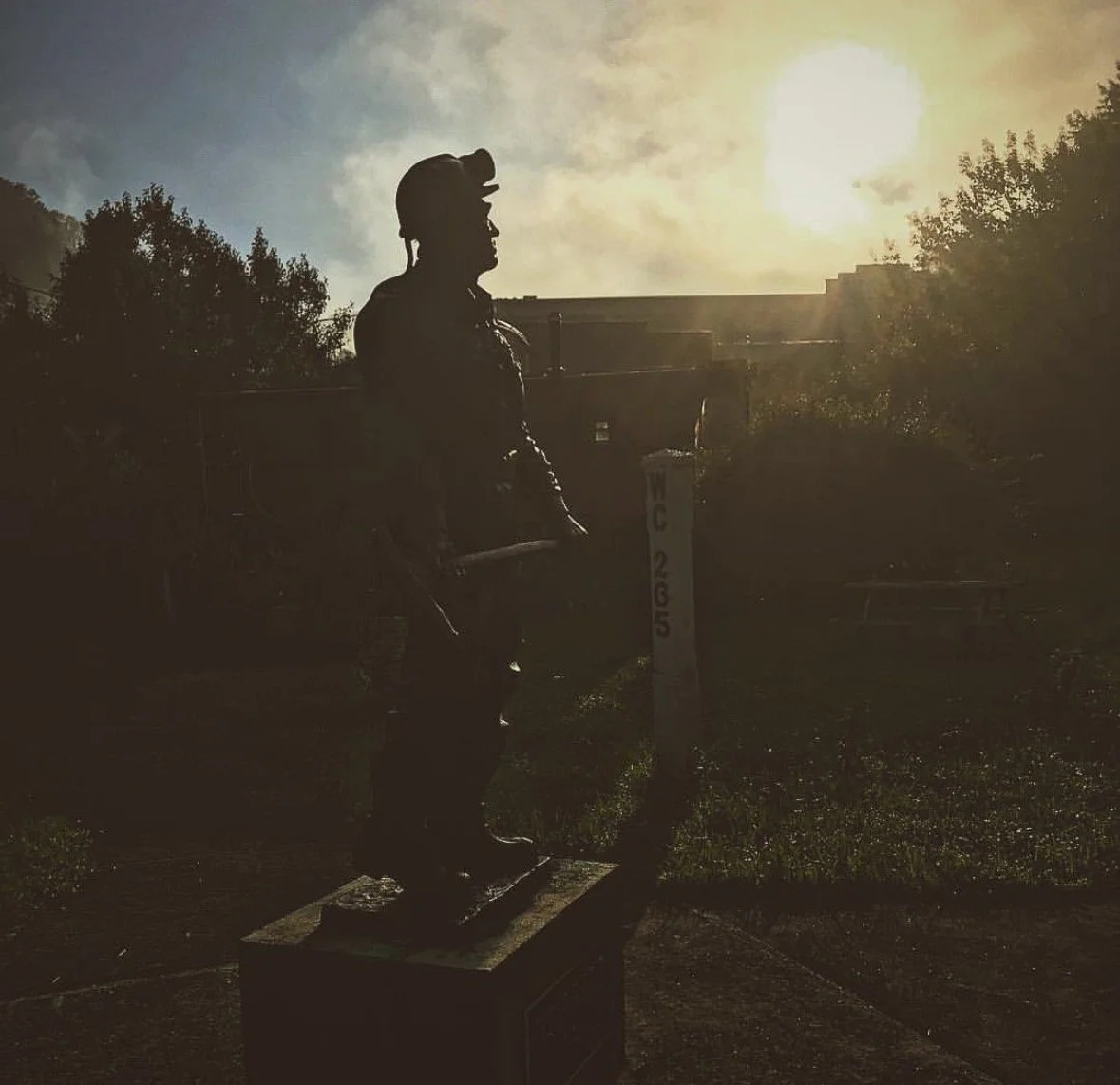
“IMG_5535” - Eric Creech
In seventh period Latin class, someone farted and wouldn’t fess up. We blamed Jake Tabersham, the only junior among freshmen. Mike Sfreddo, who sat behind Tab, pushed his desk back as far as it would go, bumping the desk of Jane Forche. Zack Horton gripped his spiralbound notebook with both hands, using it as a fan to direct air in Tab’s direction. Mark Malley consulted his Latin dictionary and wrote et Tab pedit on the board after translating Gaius togam a puella emit. Even our teacher, Mrs. Spalding, divorced and childless in a way we thought made her deservedly unloved, told him to change his diet. Tab denied all, said it was one of us.
The next day Jimmy Lonergan raised the stakes, bringing a gas mask to class—black, with yellow eyepieces—and waited until he sat down next to Tab to put it on. None of us had to ask where he got it—his basement, of course, where his father kept Vietnam gear. Other dads also had evidence. My best friend Aimee—a girl I trusted with my secrets—had a dad with a glass eye that he removed from its socket before going to bed each night. Other fathers dove under desks while at work, spilling coffee on legal briefs and specs. Some startled at the tornado siren, which was tested every Wednesday at noon. It’s not funny, Andy Trujillo said to me as we walked the tree-lined streets of Columbus in our Catholic school uniforms. Andy’s father couldn’t handle the tornado siren. He sometimes sought cover in a closet. I must have laughed. I didn’t mean to laugh. I just—I couldn’t imagine my father like that.
I was lucky. My father’s lottery number had been high. Andy wasn’t lucky. Jimmy wasn’t. Aimee wasn’t. She started dating Jimmy. They fucked in her bedroom while her dad was downstairs. His glass eye didn’t quite move in tandem with his good one. Our dads really hit it off, she told me of the first time her dad met Jimmy’s. They got drunk together. But one day she invited me for a sleepover after a football game—she played flute in the marching band—and her father saw us coming in late. Slut, he said, both eyes fixed on us. I couldn’t tell which one was glass. His arm a bolt that locked me out. Slut. Her mother had found her diary with its passages about Jimmy and told him everything. You come inside, he said to Aimee. To me: You can’t be here. I’ll call your folks. I retreated to the night, to the apron of the driveway, and waited. I remember that I pretended not to remember.
It was the year of the eclipse. Annular. Total. First time an eclipse happened in our lifetime, Columbus was in its path. The teachers herded us outside to watch, distributing special shades so we could stare at the sun. But I didn’t look at the sun. Instead I sat on a bench, watching the determined shadows, night without night. The animals went quiet. I now wonder about the Vietnam dads, if they dove under desks, their bodies confusing annularity for smoke, ash, dioxin. I saw Jimmy staring at the sun. I saw Aimee holding his hand. Wars were coming, but we didn’t know. Couldn’t imagine what our own children would find in basements—a charred handlebar disfigured from a drone strike. A ring worn by a suicide bomber who failed to kill anyone, his last act fading like muffled birdsong. A hairbrush taken from an olive grove. Or maybe nothing at all because forever wars are fought by soldiers hugging the stratosphere, or stationed behind screens. They cannot hear the splash they choreograph. They have only the doom a body can carry.
When Aimee called the next day, we talked. She didn’t say, My father didn’t mean anything by that, that night after the game. Instead we talked about Jimmy, how he loved her, gave her a ring. She didn’t know where he got it—from a basement, maybe, or from his mother’s drawer. She was beautiful. I understand now how the future greeted her each morning. Hello, enemy, it said when she awoke in a body that was still new and inexplicable, sighing under the sheets. Everything we were going to become—soldiers, spectators, strangers to each other—was in front of us, no more distant than the sun.
That spring, we laughed at Jimmy’s father’s gas mask. We laughed at Tab for farting, who didn’t care that freshmen laughed at him. He was an athlete—on the tennis team, the football team. He’s actually really good, Jimmy said to me in homeroom one morning. When Tab’s name was announced over the loudspeaker for winning a state title, we smiled. We knew him, we knew him. We told kids around us in homeroom, kids who didn’t take Latin. We were proud. This was what bound us—a chain of command that willed us to venerate.
About the Author
Kristina Garvin lives in Philadelphia. Her work appears in North American Review, Salamander, Barrelhouse, The Forge Literary Magazine, and elsewhere. Originally from Ohio, she holds a PhD in early American literature and currently works as a government project manager.
About the Artist
Eric is a photographer and writer from Kentucky. His work has previously been published by Testament: A Rural Anthology, Appalachiabare.com, Peatsmoke, and Constellations: A Journal of Poetry and Fiction. Eric spends his time with his partner, hiking, cooking, and walking their dog.